

Food court design has moved beyond basic rows of outlets and repetitive layouts. Today, a successful food court must balance efficient planning, strong visibility, and a clear identity. As a result, this project explores a modern food court architecture concept that responds directly to these needs while remaining practical and easy to use.
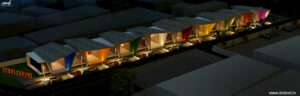
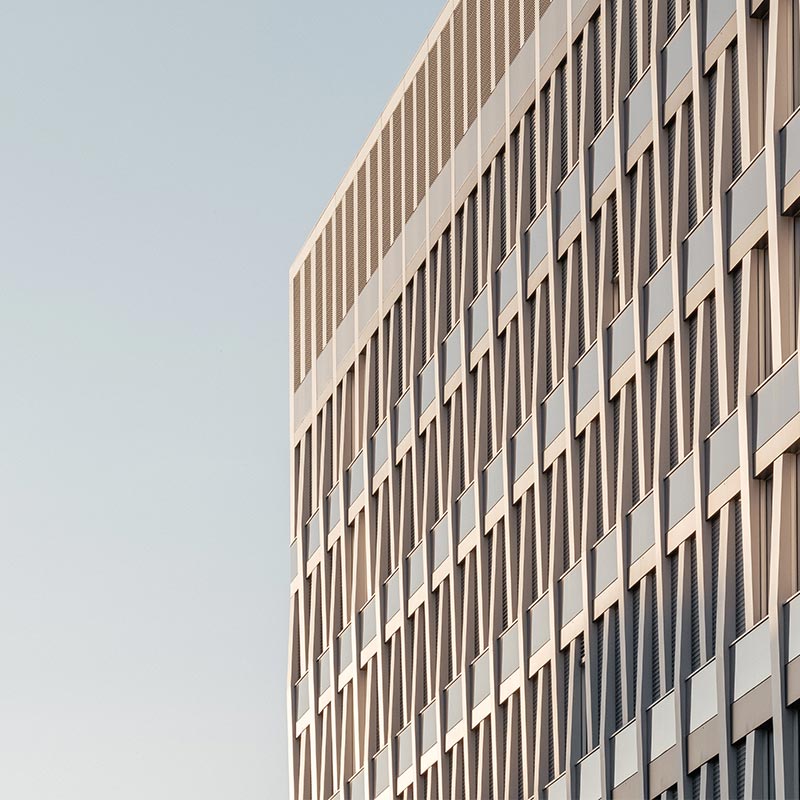
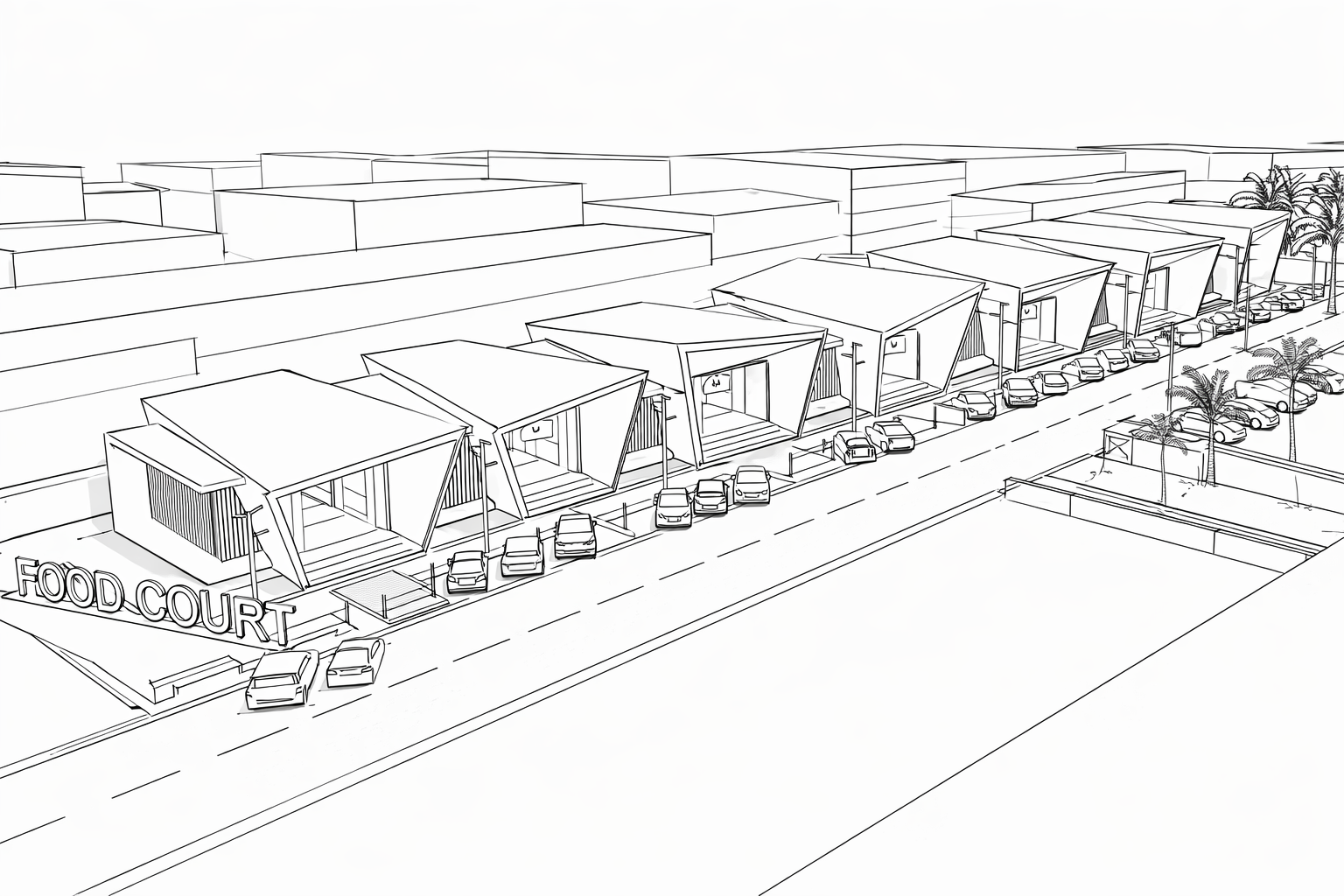
The design process began with the site conditions. Since the plot had limited frontage but strong road exposure, a flat façade would have felt monotonous. Therefore, the design introduces angular forms along the length of the building. These angled fronts break visual repetition and create a clear rhythm across the site. At the same time, each unit stands out while the food court reads as one continuous development.
Functionality guided every design decision. First, each outlet supports simple and efficient operation through clear entrances and strong road visibility. Next, direct parking in front of the outlets allows quick access for short visits. Consequently, this arrangement reduces unnecessary movement and improves customer turnover. In addition, a continuous pedestrian walkway runs along the frontage, which ensures safe and comfortable circulation between units.
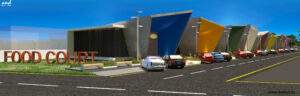
Color plays a clear and purposeful role in the design. Instead of relying on heavy signage, the project uses distinct color panels to mark each outlet. As a result, visitors can easily identify and remember specific food brands. Moreover, the controlled use of color improves wayfinding and adds energy to the street-facing façade without overpowering the architecture.
Material choices focus on long-term performance. Because food courts experience constant use, the design favors clean surfaces, durable finishes, and simple detailing. This approach helps the building age well and remain easy to maintain. Furthermore, integrated lighting highlights the angular façades and improves night-time visibility. As a result, the food court stays active, safe, and visually strong after dark.
Overall, this food court design achieves a careful balance between form and function. It combines a strong visual identity with clear, efficient planning. Therefore, the space remains easy to navigate, flexible for multiple food brands, and engaging for everyday visitors. By prioritizing accessibility, efficiency, and a disciplined architectural language, the project shows how compact food court developments can move beyond standard templates and create a memorable urban presence.